In the last couple of days I’ve moved by bus, ferry, and train to the tip of the Italian boot. I found Herakles footprints again in the museum at Paestum on the Amalfi coast. Panels from temples here once showed many of Herakles’ exploits, including one tale I had never heard about in which Herakles is drawing his sword to defend Hera. Usually, our hero had a negative relationship with his stepmother.
The adventures of Herakles took him across the Mediterranean. One of the longer stories was the “labor” of stealing the cattle of Geryon, which is said to have taken place in southern Spain in the region where they currently make sherry. Herakles stole the cattle killed the shepherd and his dog and then drove the cattle along the coast of France and down the western coast of Italy until he reached strait between Italy and Sicily. According to myth, Herakles swam across the strait. Tomorrow I’ll be making the same crossing needless to say without swimming, thanks to the ferry and some more trains.
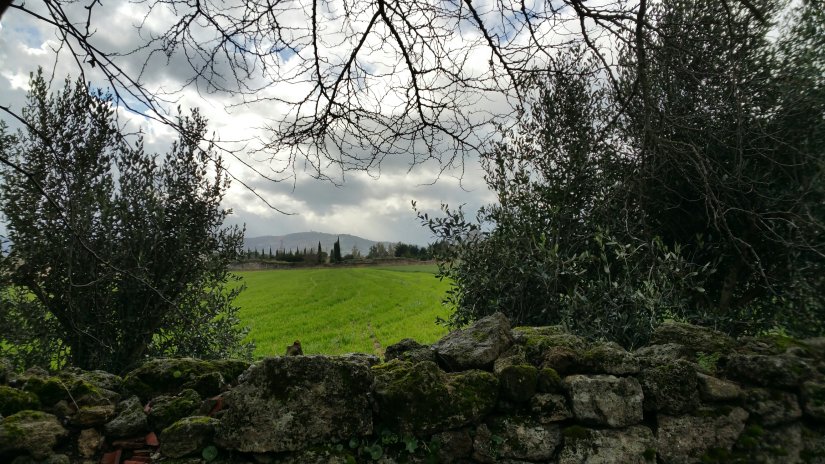
We would expect to find images of Heracles in any Greek temple, but it was still interesting that such a violent character is idolized in a site initially honoring Hera and other goddesses. If Hera was an earth and fertility goddess, then she found the right place. The train today ploughed through a sea of greenhouses and finally a region of fields and olive trees, before dropping me off right in front of the archeological site. The ten minute walk was richly perfumed with manure and falling rain. All night a huge thunderstorm raged (Zeus was on a bender.), which was received as a blessing by these verdant hills. In ancient Greece January was called Gamelion, the sacred time of the marriage of Zeus and Hera, sky and earth. Through the pouring rain, I certainly felt blessed and wet… it felt like the gods were getting it on.
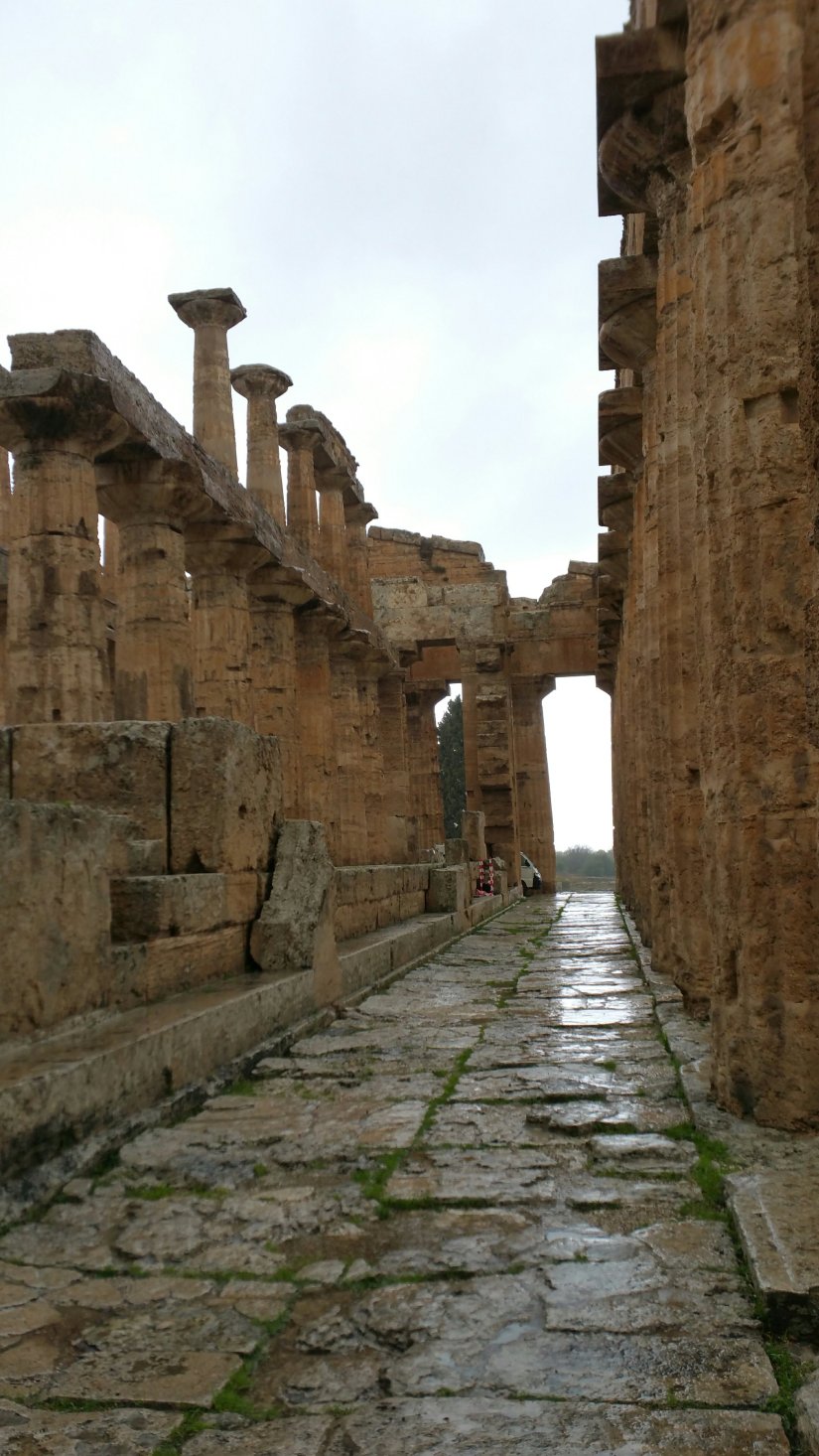
Paestum has some of the best preserved temples anywhere in the Mediterranean. The remains of the city still surround the temples, giving one a good sense of how they lived together in Greek and Roman times. We were allowed to enter the temple, but since it was raining I virtually had the place to myself.
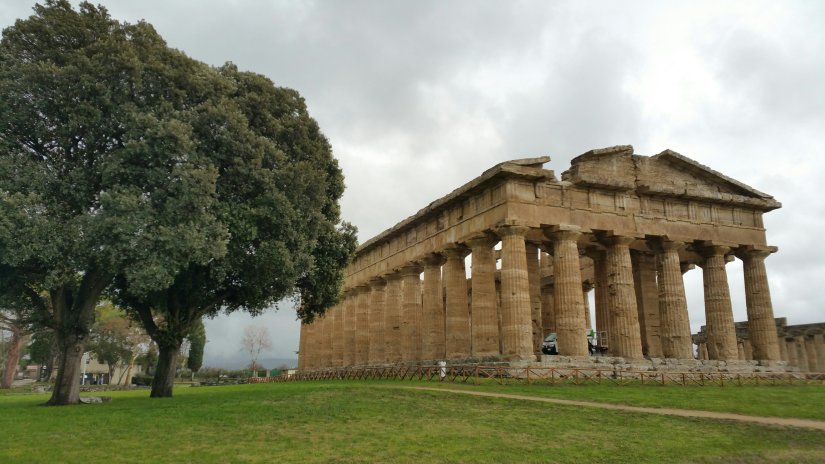
The signage hints that the biggest temple was for Apollo or Neptune, but Wikipedia says that the first two and oldest temples were built in honor of Hera and the third temple was Athena’s. Some of the information in the visitor centre implies that a great mother was honored here as well. Originally I thought that Paestum meant it was a place of peace (paix), because that is how it feels. I was astonished that at the remains of this ancient city continue to hold an energy of prosperity and fertility just as the healing centre of Epidaurus felt very high and light.

 Decoding the Night
Fabulous!
LikeLike
Thanks… Glad you enjoyed. Where are you?
LikeLike