I finally met Herakles. He worked for the archelogical site at Malia, where he mostly just soaked up the Cretan spring sun and listened to the bees in the fields of yellow wood sorrel, while protecting the site from unruly tourists. He told me a version of the Dionysus myth that I had not heard before, earning him the name of Dimetrios, one born from two wombs. According to this story Dionysus was the favorite of Zeus so the Titans decided to destroy the young god. They seduced him by putting a mirror in front of the boy who then chased after his own image until he came the end of the universe, where the Titans tore him apart and ate everything but his heart. Zeus recovered the heart, which he then sewed into his thigh so that the young god could be born again. I had been concerned about considering Dionysus as one of the dying and resurrected gods, because most of his myths don’t include killing and rebirth. It was great to know that this version is still in use among Greeks.
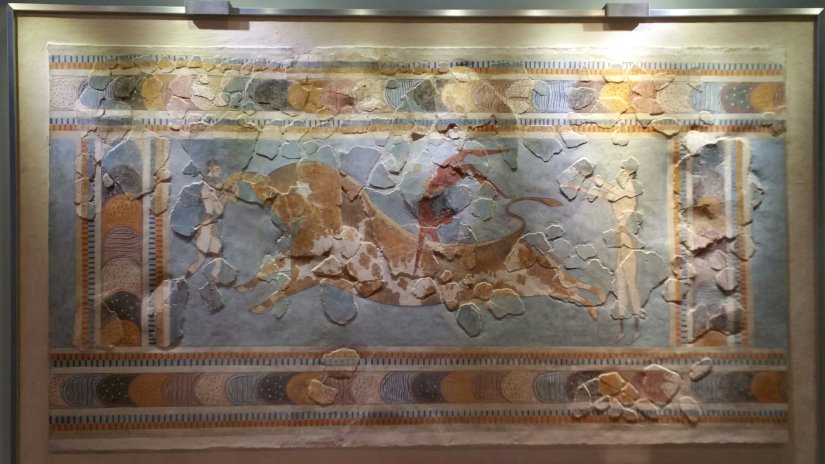
The mythical Herakles also came to Crete where he wrestled with and led away the Cretan Bull who had fathered the Minotaur, by fulfilling the queen’s unatural lust to have sex with this magnificent bull. Much of the Minoan religion, which predated classical Greeks occupation of the island celebrated bulls in religious ceremonies, including the feat of bull-leaping. Instead of goring the bull as modern matadors do, a team of acrobats would assist as one grabbed the horns and used the momentum of the bull tossing it’s head to somersault over the animal and be caught by a teammate. Given all the other extreme sports being mastered these days, I’m surprised this ancient game has not been revived.
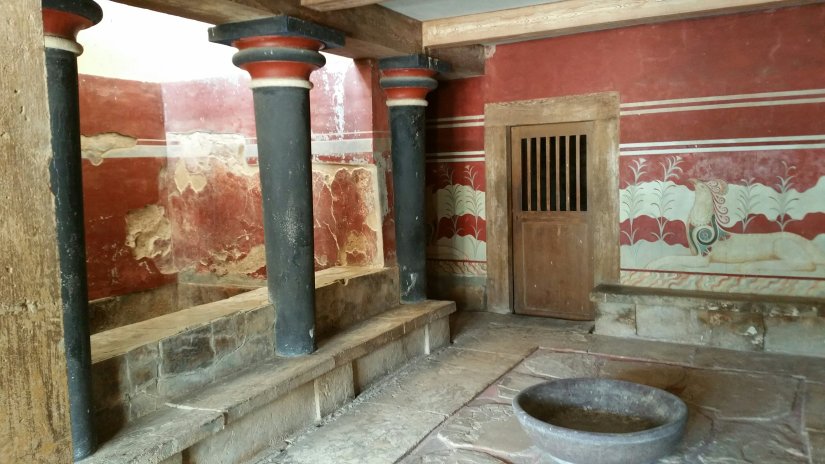
Most of the sites that I have visited in Crete have been from the Minoan civilization, which thrived until about 1200 BCE. It is particularly known for the graceful architecture, frescoes of nature and goddess imagery. Women seemed to have held an honored position in this culture. Nothing has sparked my imagination quite as much as the lustral baths, which are in lower chambers with openings above to let the light cascade down alabaster walls. This is the antechamber; the bath is down the stairs beyond the low wall. Today birds fly through the halls of light and color.
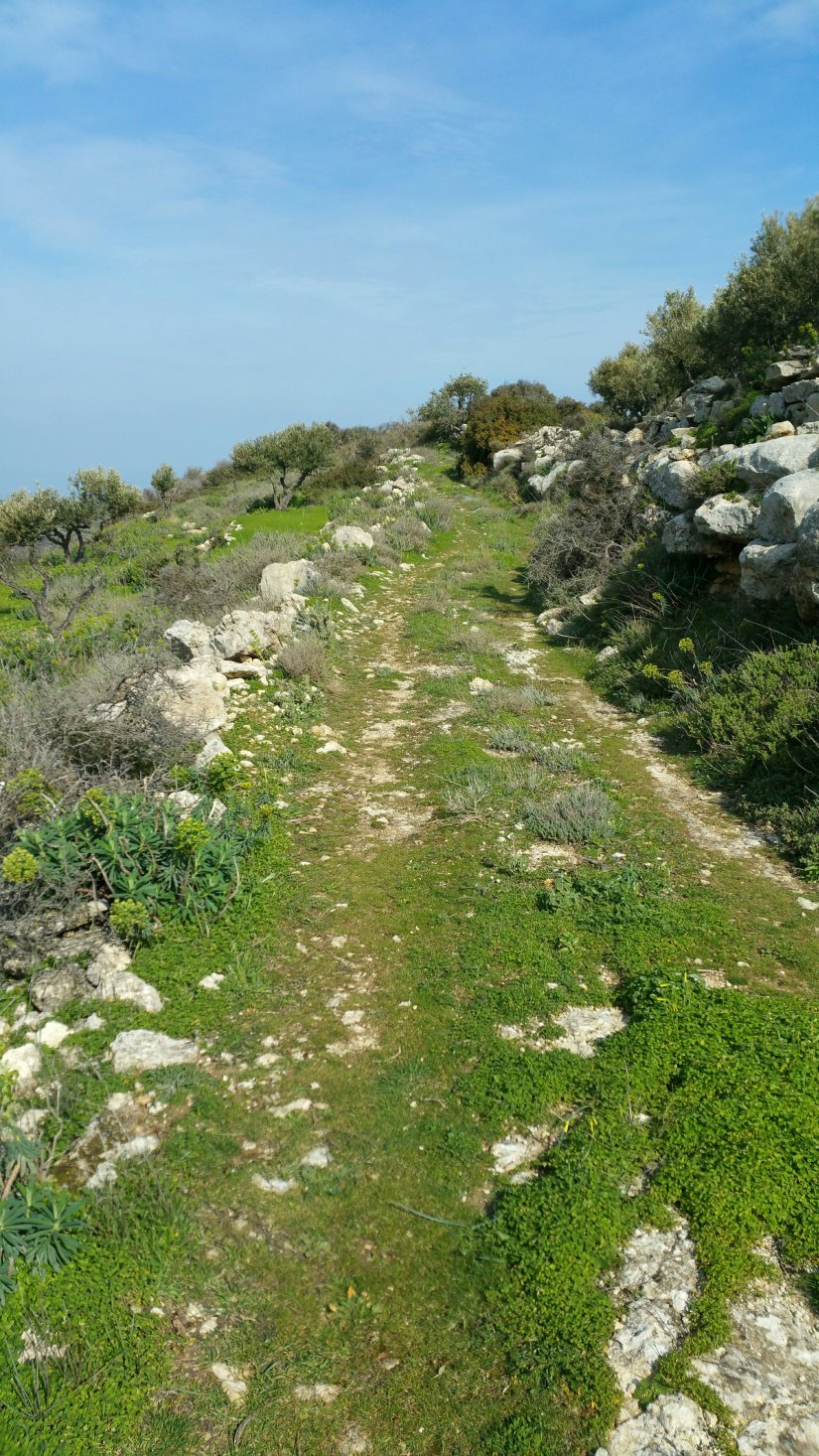
I visited more ancient sites near Arkanes, where the first wine was produced. Many of the less well known ruins lie beyond locked gates at this time of year, but I had a glorious stroll (13 mi.) through the olive and grape fields back into town… the road less travelled.
Between rocks, trees and beaches, it’s been pure bliss.

 Decoding the Night