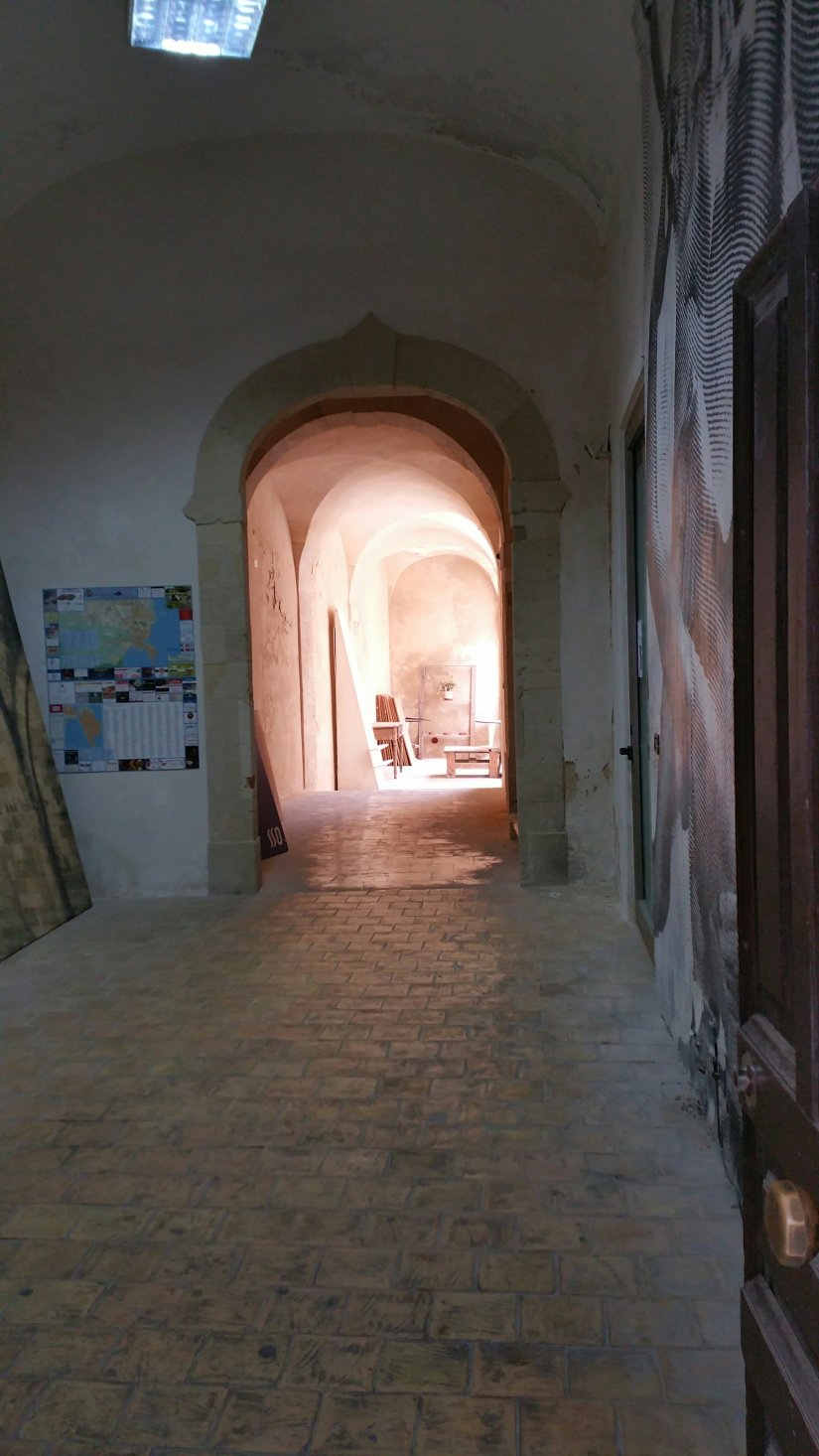
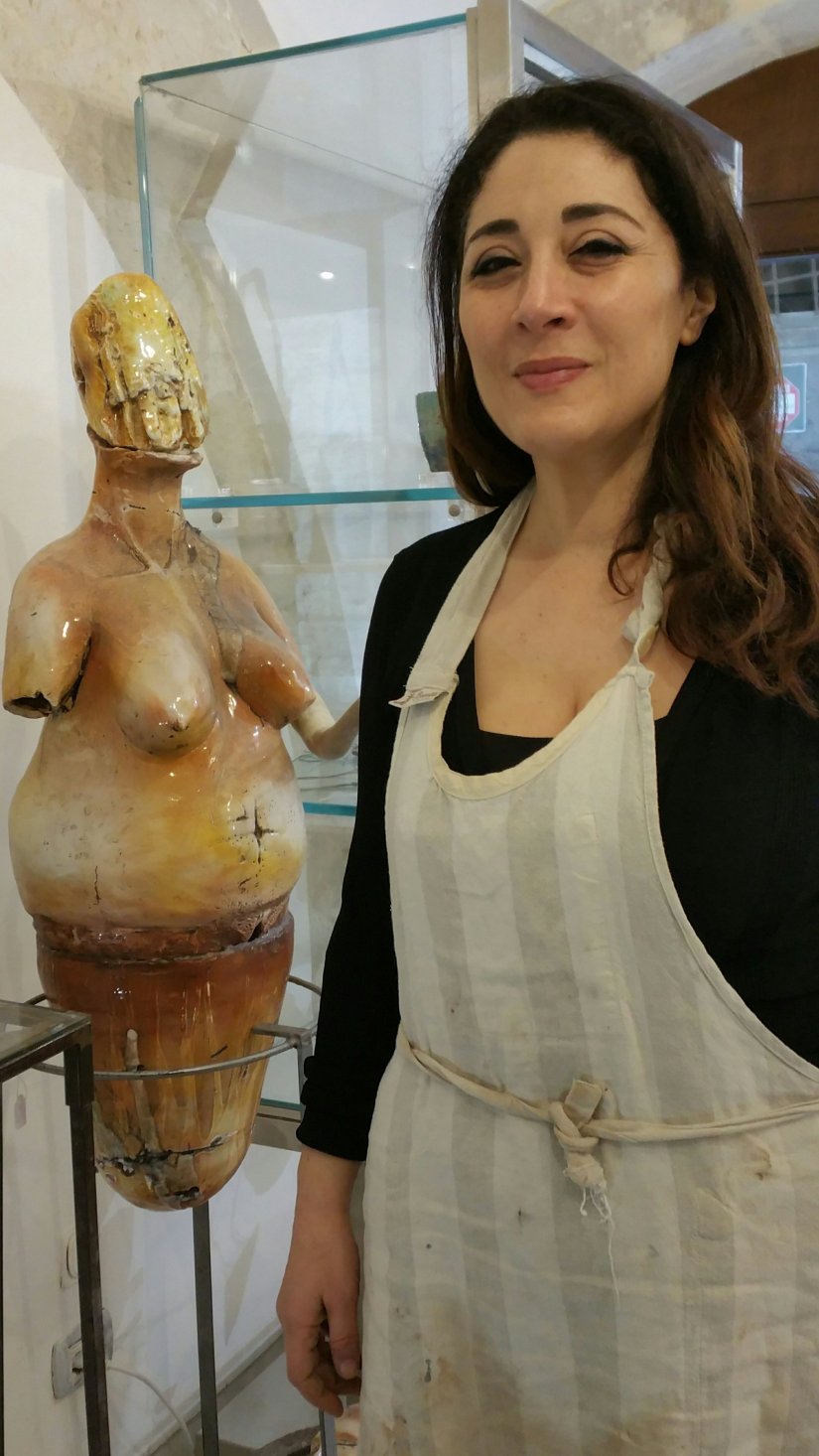
I seem to be deep in the heart of parlo solo italiano, but that works too. I had a great conversation with a woman sculptor, Stefania Pennacchio, in the center of the ancient city of Syracuse about art, mythology, women and speaking with the heart. In the end that is where all language starts and ends.
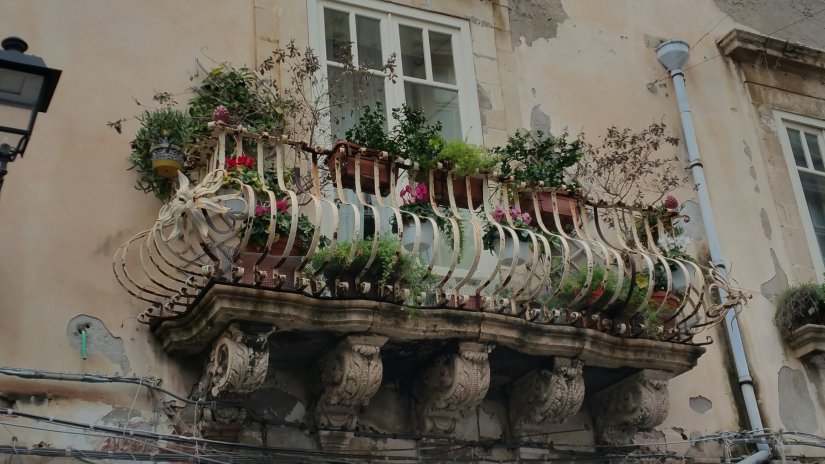
Half of the city is on the island of Ortigia, connected by two bridges to the mainland. It is a magical maze of narrow streets lined with potted cactus and wrought-iron balconies. It seems to me that avoiding cars on these streets only a couple of yards wide is hard enough without filling the “sidewalk” strip with cacti, but it does add to the ambience. I realized there are no pedestrian crossing lights here either… you just kind of pick your best shot for slinking through traffic.
The ferry ride between the boot tip and Messina was quick enough, I just had no idea I would need to book ferry and tram rides in the 20 minutes the train schedule gave me to make the transfer. Had to catch a later train and couldn’t contact the guesthouse that I would be two hours late, because there is no open wifi anywhere on public transport in Italy. Most train stations only have bathrooms in their cafe/bars and there are no ATM machines either. In spite of logistics, I soon feel in love with Sicilia.
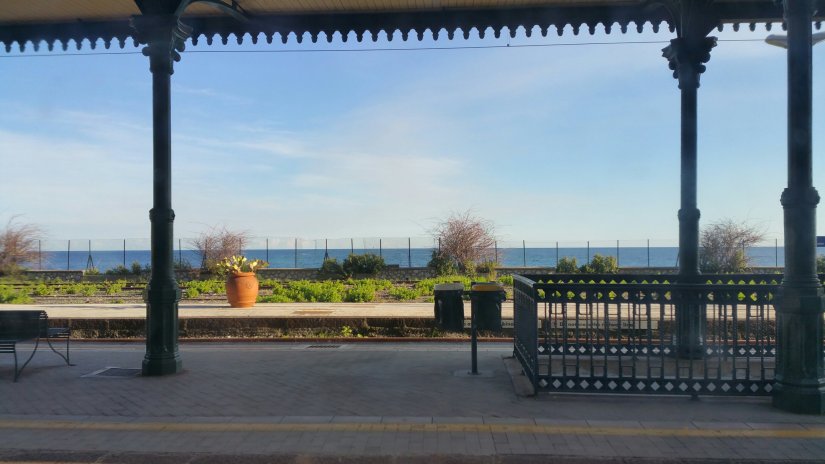
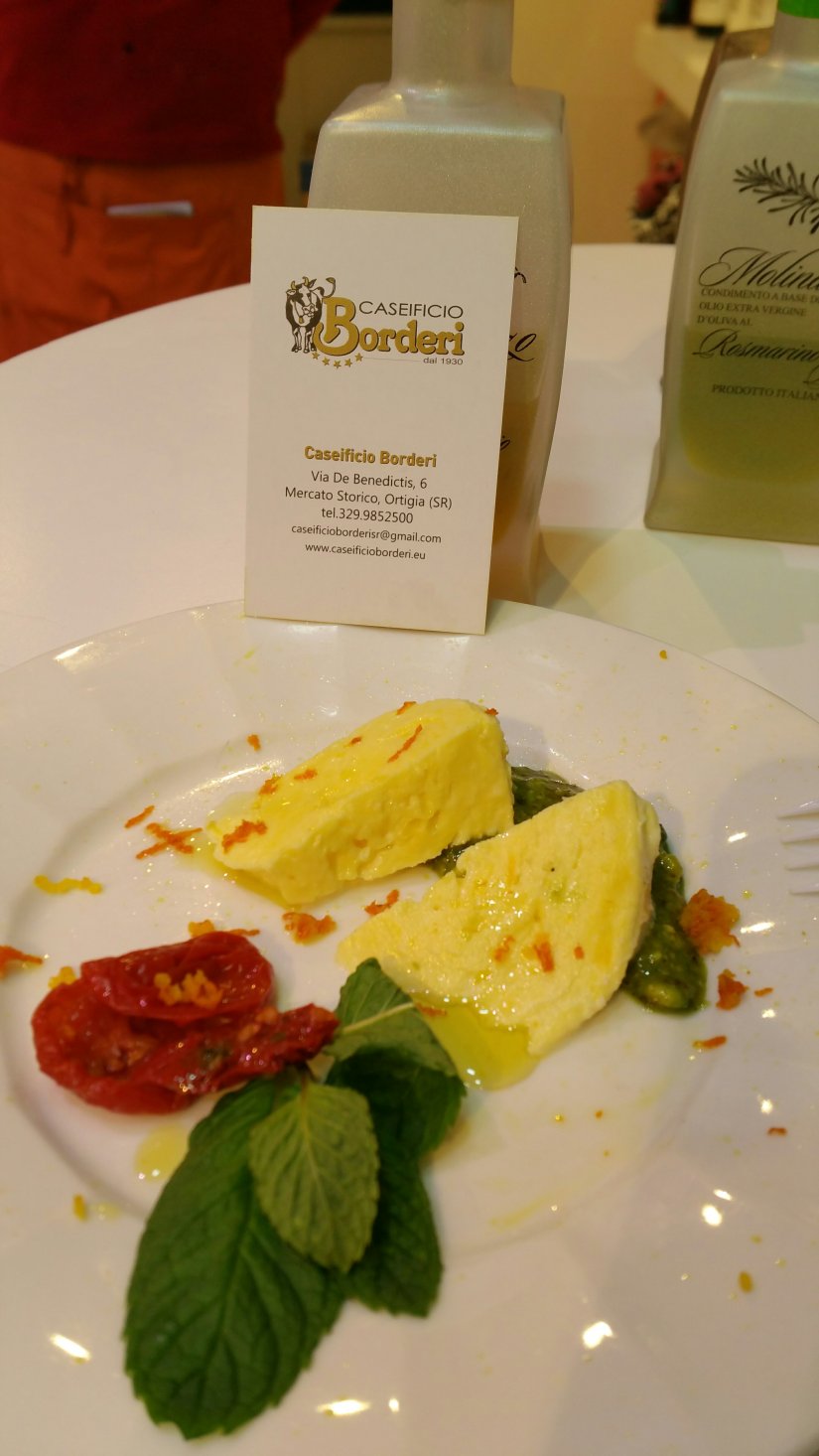
I noticed right away that the plants here are a mixture of desert succulents and tropical species. Phildendron, banana trees, rubber plants and other common houseplants are trees lining the streets here. On the train to Syracuse I was puzzled by the trees with bright red flowers all across the top, until I realized that they were poinsettas. Everything is blooming even in January and nothing is subtle. The market was rich with fresh vegetables, fish and saffron infused goat mozzarella served with mint, shaved orange peel and pistachio pesto.
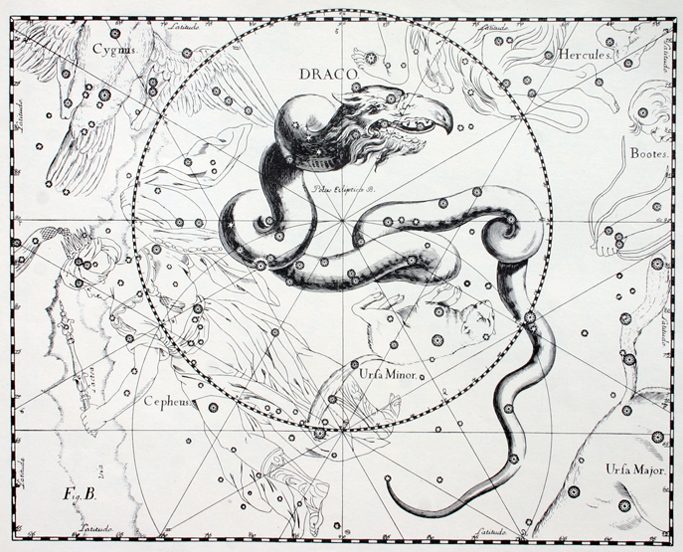
It is no wonder that there is a Herakles story to establish Greek authority to own this land. Many of the labors are thinly veiled claims to kingdoms and lands that Herakles supposedly won by defeating the native populations. In Sicilia a man named Eryx (Aries??) stole a bull from the herd of Geryon cattle, which Herakles had stolen in Spain. Naturally, Herakles killed Eryx for his audacity, but generously allowed the inhabitants of Sicilia to enjoy the fruits of their land until his descendants one day returned to claim sovereignty. Those descendants were mostly Spartans. Many of the places where Herakles overcame adversaries had a historical record of the native population being decimated and a second town of the same name was established on a remote island or in modern Turkey by the survivors. Herakles was mentioned by Homer and other early Greek authors, but the bulk of his stories were compiled in the second century AD by pseudo-Apollodorus, who not only had an interest in mapping the night sky, but also in establishing rights for Greek rulership across the Mediterranean.

 Decoding the Night